Ledger.com/start: What Most New Ledger Users Get Wrong (And How to Do It Right)
Buying a Ledger wallet is often the moment people decide to take crypto security seriously. But owning the device alone does not guarantee safety. The real foundation of secure self-custody begins at Ledger.com/start, where the wallet is initialized, verified, and tied to the user for the first time.
This blog takes a different approach. Instead of repeating a setup tutorial, it focuses on how people actually use Ledger wallets, what often goes wrong during onboarding, what Ledger has changed recently, and how Ledger.com/start fits into long-term crypto ownership in a realistic way.
Ledger.com/start Is Not “Just a Setup Page”
Many users treat Ledger.com/start as a one-time technical step they want to finish quickly. In reality, it is the most important interaction they will ever have with their device.
This is where:
The wallet is created for the first time
Private keys are generated securely
The recovery phrase is shown once
The trust boundary is established
Everything that happens later—sending crypto, holding long-term, using DeFi—depends on how carefully this moment is handled.
Ledger deliberately slows this process down. That friction is intentional.
The Most Common Onboarding Mistakes
Over the last few years, a clear pattern has emerged among new Ledger users.
One of the most common mistakes is assuming that Ledger Live or the device itself “holds” the crypto. In reality, the recovery phrase created during setup is the true access point. Losing it means losing control forever, regardless of the device.
Another frequent mistake is rushing through Ledger.com/start on an untrusted computer. Malware cannot extract private keys from a Ledger device, but it can still mislead users into approving the wrong actions if they are not paying attention.
There is also a growing issue with fake onboarding links. Scam pages often look identical to Ledger’s real site. This is why manually typing Ledger.com/start is emphasized so strongly.
What Ledger Has Quietly Improved Recently
Ledger’s recent focus has been less about flashy features and more about reducing user error.
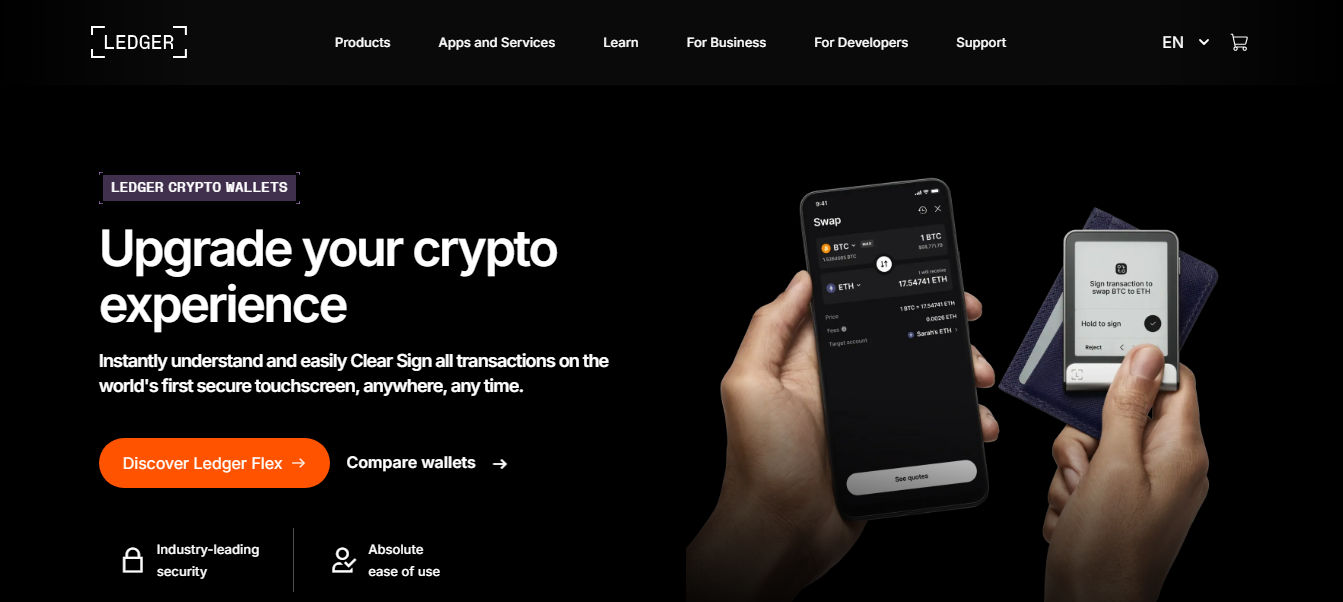
Transaction screens now display clearer details, making it easier to understand what is being approved. This matters especially for DeFi and smart-contract interactions, where blind signing has caused significant losses in the past.
Ledger Live has also matured into a more stable and predictable interface. Portfolio views are clearer, account management is smoother, and firmware update flows are more explicit about what is changing and why.
Ledger.com/start ensures users begin with these improvements in place, rather than discovering compatibility or security issues later.
Ledger Live and the Illusion of Convenience
Ledger Live is often mistaken for a typical software wallet. It is not. It is an interface—nothing more.
Private keys never leave the hardware wallet, and Ledger Live cannot move funds on its own. Every sensitive action still requires physical confirmation on the device itself. This separation is one of the most misunderstood but important aspects of Ledger’s design.
For users coming from mobile wallets or exchanges, this can feel slower. Over time, most users realize it is also far safer.
A More Realistic View of Self-Custody
Self-custody is often marketed as absolute freedom. The truth is more nuanced.
Ledger wallets remove reliance on third parties, but they also remove safety nets. There is no password reset, no customer support recovery, and no emergency rollback. Ledger.com/start makes this clear early, which is why many experienced users respect its strict onboarding process.
Good self-custody is not about paranoia. It is about consistency, verification, and patience.
Who Benefits Most From Using Ledger Properly
Ledger wallets are particularly well-suited for users who:
Hold crypto long-term
Want to avoid exchange risk
Interact with DeFi but value transaction verification
Prefer clear ownership over convenience
Ledger.com/start sets expectations correctly for these users. It does not promise simplicity at all costs—it promises control.
Frequently Asked Questions
Is Ledger.com/start required every time I use my wallet?
No. It is mainly used for initial setup, recovery, and firmware updates.
What happens if my Ledger device is lost or damaged?
Funds can be restored using the recovery phrase created during setup.
Can Ledger access my crypto or recovery phrase?
No. Ledger does not have access to private keys or recovery phrases.
Is it safe to use Ledger with DeFi apps?
Yes, as long as transactions are verified on the device screen and blind signing is avoided.
Why Starting Correctly Matters More Than Anything Else
Most crypto mistakes are irreversible. Once funds are gone, there is no appeal process. Ledger.com/start exists to reduce the chances of those mistakes happening at the very beginning.
Users who take onboarding seriously tend to experience fewer issues later. They understand what they own, how access works, and why verification matters.
Final Perspective
Ledger.com/start is not about installing software—it is about establishing ownership. It introduces users to the reality of self-custody in a controlled, deliberate way.
As crypto continues to mature, shortcuts become more expensive and discipline becomes more valuable. Ledger.com/start is where that discipline begins, setting the tone for how digital assets are held, protected, and respected over time.